
Stem Cell vs Exosome Therapy
The real difference, honestly explained. Neither is universally "better." The right choice depends entirely on what your body actually needs.
Most articles comparing these two treatments are selling you one of them. This one isn't. Both are legitimate regenerative therapies. They work through fundamentally different mechanisms, they suit different conditions, and at Eden Aesthetics Clinic we offer both — because for some patients stem cells are clearly the right answer, for others exosomes are, and for a meaningful number, the answer is both.
-
Living cells that can divide and self-renew
-
Can differentiate into new tissue types
-
Physically replace damaged or lost cells
-
Continue producing their own signals over time
-
Longer clinical track record
-
Requires harvest or donor source
Best when: tissue has been genuinely lost or structurally damaged and needs physical rebuilding — significant cartilage loss, structural joint degeneration, substantial tissue defects.
"New workers arriving on site — capable of becoming whatever the job needs."
Stem Cells
The Builders
-
Nanoscale vesicles — not living cells
-
Carry growth factors, proteins, microRNA
-
Instruct existing cells to repair and regenerate
-
Cannot divide or replicate themselves
-
Cell-free — no immune rejection risk
-
Off-the-shelf, no harvest required
Best when: the tissue is present but underperforming — aging skin, dormant hair follicles, inflamed but structurally intact joints, and virtually all aesthetic and anti-aging applications.
"A perfect set of blueprints — telling the workers already there exactly what to do."
Exosomes
The Instructions

The question isn't "which is better."
It's "does my body need new material — or better instructions?"
If tissue has been genuinely lost or destroyed — significant cartilage degeneration, structural damage, tissue that is no longer there — you need something that can physically rebuild it. That's stem cells. They arrive, they divide, they become the tissue that's missing.
If the tissue is still there but underperforming — skin that has stopped producing collagen, follicles that have gone dormant, joints that are inflamed but not destroyed, cells that have simply stopped receiving clear instructions — then you don't need new builders. You need to tell the ones already there what to do. That's exosomes.
This is why the answer to "which is better" is almost always "it depends on what's actually wrong." A treatment that rebuilds structure is wasted on a problem of communication. And a treatment that improves communication cannot rebuild what isn't there.

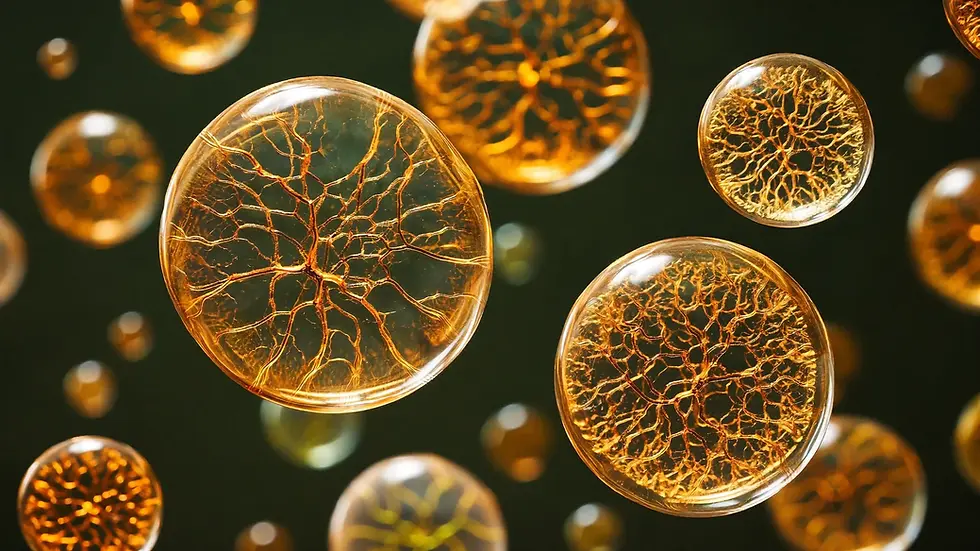
The stem cell vs exosome framing assumes you have to choose. Clinically, you often don't — and for a meaningful number of patients the combination outperforms either treatment used alone. Here's why the two work together so effectively.
Stem cells build. Exosomes accelerate.
Stem cells introduced into damaged tissue take time to establish, differentiate, and begin working. Exosomes delivered alongside them create an optimised biological environment — reducing inflammation, improving blood supply, and signalling the surrounding native cells to support the regeneration already underway. The stem cells work better because the environment is better.
Stem cells for structure. Exosomes for maintenance.
A common protocol: a single stem cell treatment as the foundational intervention where genuine tissue rebuilding is needed, followed by periodic exosome sessions as maintenance and signal reinforcement. This delivers the structural benefit only stem cells can provide, with the low-burden, no-downtime maintenance only exosomes make practical.
The whole is genuinely greater.
Published works in orthopaedic and aesthetic journals indicate increasingly superior outcomes from combined protocols compared with either treatment in isolation. This isn't a marketing position — it reflects a real biological synergy: stem cells provide the raw regenerative capacity; exosomes optimise the conditions in which that capacity is expressed.

Which treatment for which condition
This is the section most people are actually looking for. Below is our clinical view — based on the mechanism of each treatment and what the condition actually requires.
Skin aging, fine lines & collagen loss
Your fibroblasts are still there. They've simply stopped receiving strong enough signals to produce collagen at the rate they once did. This is a communication problem, not a tissue loss problem — exactly what exosomes are built for. Stem cells would work, but it's using a sledgehammer where a precise instruction will do. Exosomes also offer zero downtime, standardised potency, and no harvest procedure.
Exosomes — clear winner
Hair thinning & early-stage hair loss
In androgenetic alopecia, follicles miniaturise before they die. They're dormant, not gone. Exosomes reactivate dormant follicles, extend the growth phase, improve scalp blood supply, and calm follicular inflammation — precisely the interventions needed. Where follicles are genuinely lost (advanced, long-standing baldness), neither treatment will regrow them and transplant is the honest answer.
Exosomes — usually first choice
Cartilage loss & structural joint degeneration
Cartilage doesn't heal on its own — it has almost no blood supply. When it's genuinely worn away, no amount of signalling will bring it back, because the cells needed to rebuild it aren't there. Stem cells can differentiate into chondrocytes and physically rebuild cartilage tissue. This is the scenario where stem cells do something exosomes fundamentally cannot.
Stem cells — clear winner
Joint pain with inflammation but intact cartilage
Weight redistributing to the middle, muscle getting harder to build, fat not shifting despite effort — these are signs of hormonal and metabolic shifts that start in your late 30s. Peptides that support the GH axis and mitochondrial function address this at the root.
Either — depends on the details
Facial rejuvenation & skin quality
For skin texture, glow, pore refinement, pigmentation, and overall skin quality, exosomes are the more appropriate and more practical treatment in almost every case. They deliver a higher growth factor concentration than stem cells, require no harvest, involve no downtime, and can be delivered via microneedling for full-face coverage. Stem cells are not wrong here — they're simply more than the problem requires.
Exosomes — clear winner
Systemic anti-aging & longevity
For whole-body biological anti-aging — reducing inflammaging, supporting mitochondrial function, improving recovery and vitality — both IV stem cell therapy and IV exosome therapy have a role. Many longevity protocols use stem cells as a foundational intervention, then exosomes as ongoing maintenance and signal reinforcement. The two are genuinely complementary here rather than competitive.
Often both — in sequence
Frequently Asked Questions
Stem cells are living cells that can regenerate damaged tissue, while exosomes are tiny biological messengers that signal your body's cells to repair and regenerate. In regenerative medicine, stem cells rebuild tissue, while exosomes support natural healing.
There is no one-size-fits-all answer. Stem cell therapy is often recommended when damaged tissue needs rebuilding, while exosome therapy is ideal for improving cell function, skin rejuvenation, and hair restoration. The right treatment depends on your condition.
Both stem cell therapy and exosome therapy have strong safety profiles when performed by qualified medical professionals. Because exosomes contain no living cells, they generally involve fewer theoretical risks while still supporting tissue repair.
Exosomes deliver a concentrated supply of growth factors and regenerative signals. Stem cells continue producing these healing factors after treatment, while exosomes provide an immediate regenerative boost.
- For most patients with early to moderate hair thinning, exosome therapy for hair loss is often the preferred option because it helps reactivate existing hair follicles. Stem cell therapy may be recommended in selected cases after a medical assessment.
For significant cartilage damage, stem cell therapy is often the preferred regenerative treatment. For early joint degeneration and inflammation, exosome therapy may be an effective option. A consultation and imaging help determine the best approach.
- For most patients seeking skin rejuvenation or anti-aging treatments, exosome therapy is often recommended because it stimulates collagen production, improves skin quality, and involves minimal downtime.
Yes. Stem cell therapy and exosome therapy can be combined to support tissue regeneration and long-term healing. Your doctor will recommend the most appropriate treatment plan for your needs.
Yes. Both stem cell therapy in Dubai and exosome therapy in Dubai are available in regulated medical clinics. At EDEN AESTHETICS Clinic, all regenerative treatments are performed by licensed medical professionals following UAE healthcare regulations.
The best way to choose between stem cell therapy and exosome therapy is through a consultation with a regenerative medicine specialist. Your treatment recommendation will be based on your condition, clinical assessment, and individual.
Start Your Regenerative Treatment Journey
Discover how personalized regenerative medicine can support your body’s natural renewal and overall well-being.
✔ Tailored consultation
✔ Advanced regenerative protocols
✔ Performed by experienced medical professionals
